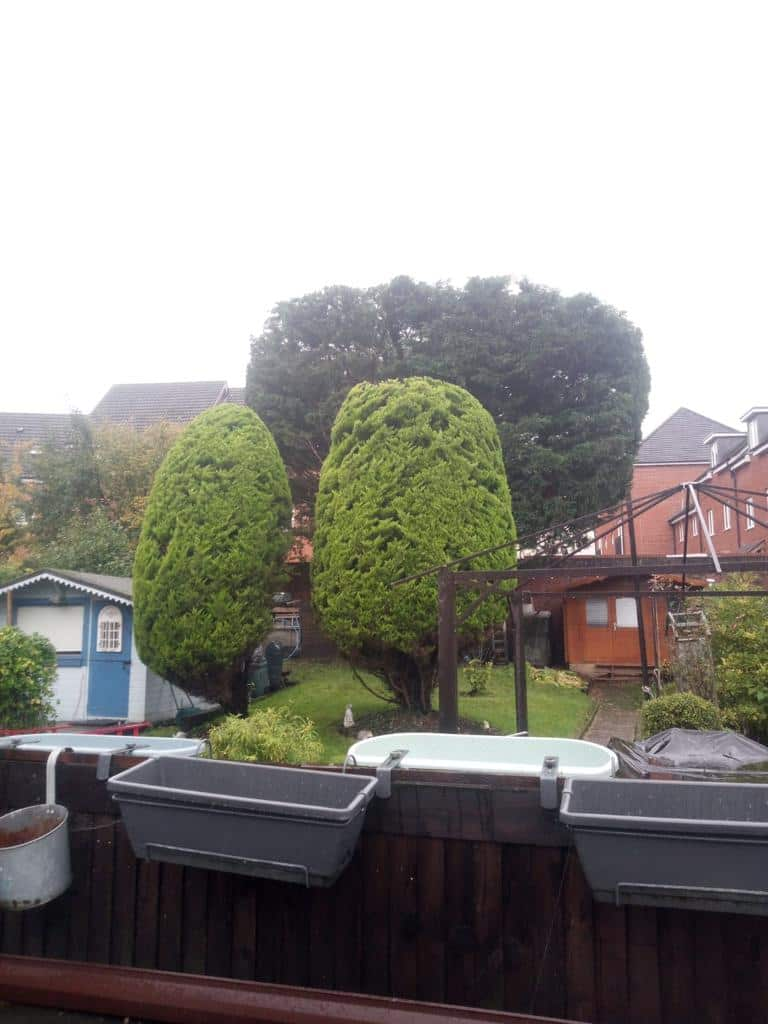
Tree cutting, pruning and trimming are terms that are often used interchangeably, but the work a tree actually requires should be determined by its condition, structure, growth and surroundings rather than by a general request to “cut it back”. Two trees of a similar size can require completely different approaches.
For property owners in Hindhead, Surrey, professional tree assessment can help establish whether a tree needs individual branches removed, its crown carefully managed, dead or damaged growth addressed, or simply no intervention at the present time. The objective should be to carry out the work that provides a genuine benefit without removing healthy growth unnecessarily.
Understanding the differences between common forms of tree cutting and pruning makes it easier to choose an appropriate approach and manage established trees effectively over the longer term.
How Do You Decide What Type of Tree Cutting or Pruning Is Needed?
The correct approach starts by identifying why the tree requires attention.
A tree that has become too wide for its surroundings may benefit from crown reduction. A tree with one problematic branch may only require selective pruning. Low branches can sometimes be managed through crown lifting, while dead or damaged branches may need targeted removal.
Professional tree surgery considers the complete tree before deciding which technique is appropriate.
What Does Tree Cutting Actually Mean?
Tree cutting is a broad term rather than one specific tree surgery technique.
It can refer to anything from removing an individual branch to carrying out substantial crown management or completely felling a tree.
For this reason, simply asking for a tree to be cut back does not necessarily provide enough information to determine what work is suitable.
A professional tree surgeon will normally consider which branches need attention, how much growth should be removed and what structure needs to remain afterwards.
What Is Tree Pruning?
Tree pruning is the selective removal or shortening of particular branches for a specific purpose.
The objective might be to remove damaged growth, manage excessive spread, improve clearance or maintain a more appropriate crown structure.
Professional pruning is selective rather than indiscriminate.
Instead of removing branches simply because they can be reached, each cut should contribute towards the intended result.
What Is Tree Trimming?
Trimming is another broad term frequently used to describe controlling unwanted or excessive growth.
When applied to trees, homeowners may use it to mean shortening outer branches or generally making the canopy neater.
However, trees should not normally be treated like hedges.
A tree canopy contains branches of different sizes, ages and structural importance. Professional tree work therefore requires more consideration than simply trimming everything back to a uniform outline.
Start With the Reason for the Work
Before deciding how a tree should be pruned, establish what you are trying to achieve.
Common reasons include:
- The tree has become too large for its available space
- Branches are extending across frequently used areas
- Lower branches are restricting access
- Deadwood has developed
- Individual limbs have become damaged
- The crown appears excessively wide
- Several trees are beginning to overlap
- Previous pruning has produced dense regrowth
- The tree needs managing as part of longer-term garden maintenance
Once the objective is clear, the appropriate type of tree surgery can be considered.
One Problematic Branch May Only Need Selective Pruning
A common mistake is assuming that the entire tree needs reducing because one branch is causing inconvenience.
If a single limb extends disproportionately across a garden, selective pruning may provide a much more targeted solution.
The affected branch can potentially be shortened or removed as appropriate while retaining suitable growth elsewhere.
This reduces unnecessary intervention and preserves more of the established canopy.
Overextended Branches Can Be Brought Back Into Proportion
Trees do not always develop evenly.
Individual branches can sometimes grow significantly further than neighbouring parts of the crown.
These overextended limbs can make an otherwise appropriately sized tree appear much larger or more intrusive.
Selective reduction of suitable branches can help restore better proportions without reducing the complete canopy.
Crown Reduction Is Used to Manage Overall Size
Where the complete crown has become too large for its surroundings, crown reduction may be appropriate.
This involves decreasing the height, spread or overall dimensions of the canopy by shortening selected branches back to suitable growth points.
Professional crown reduction should retain a balanced form.
The objective is not to make every branch finish at exactly the same distance from the trunk but to reduce the tree while respecting its natural structure.
Reducing Spread May Be More Important Than Reducing Height
A homeowner may describe a tree as “too big” when the actual problem is its width rather than its height.
Branches extending laterally across patios, lawns or other usable areas can create much more practical inconvenience than the uppermost part of the crown.
In this situation, lateral crown reduction may provide the most meaningful improvement.
Professional assessment identifies which dimensions are genuinely creating the problem rather than automatically reducing every part of the tree.
Crown Lifting Can Improve Clearance
Where lower branches are restricting access beneath a tree, crown lifting may be considered.
This involves removing or managing selected lower branches to increase clearance.
It can be useful where branches extend into frequently used garden areas or reduce comfortable movement beneath the canopy.
The amount removed needs to remain proportionate. Excessive crown lifting can alter the appearance and structure of the tree, so it should be planned carefully.
Deadwood Removal Is Different From General Pruning
Mature trees can naturally develop dead branches.
Where deadwood requires attention, it can often be removed without substantially changing the dimensions of the healthy crown.
This is very different from reducing a complete tree.
Professional assessment distinguishes dead material from healthy branches so that the work remains focused on what actually needs attention.
Damaged Branches May Need Targeted Removal
A tree can contain an isolated damaged branch while the remainder of its canopy remains in suitable condition.
Where this occurs, the affected limb can be assessed independently.
Removing or appropriately shortening a damaged branch may be sufficient without carrying out wider crown work.
If several substantial branches are showing damage, however, the complete tree may need closer assessment to determine whether there is a broader issue.
Dense Growth Does Not Automatically Mean the Tree Needs Heavy Cutting
A dense canopy can sometimes lead homeowners to request substantial pruning.
However, removing a large amount of healthy growth is not automatically the correct solution.
The density should be considered alongside the tree’s species, natural form, previous pruning and the actual problem being experienced.
Where intervention is appropriate, selective work may achieve the desired result without dramatically reducing the entire crown.
Crown Thinning Has a Different Purpose
Crown thinning involves selectively removing branches throughout parts of the crown while generally retaining its overall dimensions.
This differs from crown reduction, which specifically aims to decrease the size of the canopy.
The distinction matters.
If the main concern is that a tree extends too far across a garden, thinning the crown without reducing its spread may not solve the practical problem.
The technique should match the intended outcome.
Previous Pruning Can Affect What the Tree Needs Next
A tree’s pruning history can significantly influence its current structure.
Previous heavy cutting may have produced clusters of vigorous shoots around old pruning points. Repeated reductions may also have changed the natural branch arrangement.
Before carrying out further work, these areas should be examined.
Simply repeating previous cuts without considering the tree’s response can create an ongoing cycle of pruning and regrowth.
Vigorous Regrowth May Need Careful Management
Some trees respond strongly after substantial pruning.
Numerous new shoots can develop, potentially creating dense sections of canopy within a relatively short period.
Cutting everything back heavily again may simply repeat the same process.
Professional tree management considers why the regrowth has developed and how it can be managed proportionately.
In some circumstances, a more gradual approach may produce a more manageable long-term result.
More Cutting Does Not Necessarily Mean a Better Result
Removing the maximum possible amount of growth can be counterproductive.
Trees rely on their foliage, and excessive pruning creates a much greater change than selective management.
Heavy cutting can also encourage strong regrowth in some species.
The objective of professional pruning is therefore not to remove as much as possible. It is to remove what is necessary to achieve a clear purpose while retaining suitable structure and healthy growth.
Tree Topping Is Not the Same as Professional Crown Reduction
There is an important difference between carefully reducing a crown and indiscriminately cutting major branches back.
Professional crown reduction uses selected pruning points and considers the overall form of the tree.
Severe topping can leave abrupt cuts and significantly alter the crown structure.
Although both approaches may make a tree smaller immediately, the way the tree develops afterwards can be very different.
Good tree surgery considers the future response as well as the immediate appearance.
Mature Trees Require Particularly Careful Decisions
Large mature trees may contain substantial branches that have developed over many years.
Removing these branches represents a much greater intervention than pruning smaller growth on a younger tree.
For this reason, mature trees should be assessed carefully before significant cutting is undertaken.
Where possible, proportionate management can address specific concerns without unnecessarily altering the established crown.
Young Trees Can Benefit From Appropriate Early Management
Tree surgery is not limited to mature trees.
Younger trees can sometimes benefit from selective pruning where developing branch arrangements are likely to become problematic later.
Addressing suitable smaller branches at an earlier stage can reduce the need to remove much larger limbs in the future.
The work should still have a clear purpose rather than being carried out simply because the tree is growing.
The Tree’s Species Influences the Approach
Different trees have different natural crown forms, growth rates and responses to pruning.
A pruning specification suitable for one tree may not be appropriate for another.
Professional assessment considers how the particular tree grows before deciding how much material should be removed and where cuts should be made.
This is one reason standardised “cut everything back by the same amount” approaches are rarely ideal.
The Tree’s Condition Matters as Much as Its Size
A very large healthy tree and a smaller tree containing significant deterioration present completely different management requirements.
Size alone does not determine what work is needed.
The condition of the trunk, major branches, crown and visible base can all influence the decision.
Where deterioration is present, simply reducing the tree may not address the underlying concern.
Available Garden Space Should Be Considered
Trees need to be managed in relation to their surroundings.
A large canopy may be entirely suitable where there is sufficient room, while the same amount of growth could create practical difficulties in a more confined garden.
Professional pruning can consider how branches interact with paths, lawns and other parts of the garden.
The objective is to establish an appropriate relationship between the tree and its available space.
Several Trees May Need Different Types of Work
Gardens containing multiple established trees should not necessarily have every crown treated identically.
One tree may require selective pruning, another may benefit from crown reduction, and another may need nothing more than deadwood management.
Looking at the trees individually helps avoid unnecessary work.
Their relationship with one another can also be considered where crowns overlap or compete for the same available space.
Pruning Can Help Retain Trees That Have Become Difficult to Accommodate
A tree becoming inconvenient does not automatically mean it needs to be removed.
Where the main concern involves excessive spread, low branches or individual overextended limbs, appropriate pruning may make the tree considerably easier to accommodate.
This can allow suitable established trees to remain within the garden while addressing the specific growth causing difficulty.
Professional assessment helps determine whether retention through pruning is realistic.
Tree Felling Is a Different Decision
There are circumstances where pruning will not provide an appropriate solution.
A tree may have deteriorated significantly, become unsuitable for its position or require repeated substantial intervention without producing a satisfactory long-term result.
In such situations, felling may deserve consideration.
However, removal should not automatically be recommended simply because a tree has become large.
The condition of the tree and the available alternatives should be considered first.
Pruning Should Consider What Happens Afterwards
Trees continue growing after they have been cut.
This is fundamental to good tree management.
The branches left behind provide the framework for future development, and some trees can respond to pruning with particularly vigorous growth.
Professional tree surgery therefore considers not only what the tree will look like immediately after the work but how it is likely to develop over the following years.
Regular Assessment Does Not Mean Regular Cutting
Long-term tree management can involve periodic assessment without automatically carrying out pruning each time.
If a tree remains suitable for its surroundings and no particular problem has developed, further cutting may be unnecessary.
This prevents intervention becoming routine for its own sake.
The tree should determine when work is required rather than an arbitrary schedule.
Small, Planned Interventions Can Sometimes Prevent Larger Ones
Where a developing problem is identified early, modest pruning may sometimes prevent the need for more substantial work later.
An overextended branch can become increasingly large if allowed to continue developing for many years.
Similarly, unsuitable low growth can become much more substantial over time.
Managing particular branches at an appropriate stage can make long-term maintenance more straightforward.
Professional Assessment Helps Avoid Unnecessary Tree Work
One of the most valuable aspects of using an experienced tree surgeon is determining what does not need cutting.
A professional assessment may establish that:
- Only one branch requires attention
- Deadwood can be removed without reducing the crown
- Crown lifting would solve a clearance problem
- Lateral reduction is more appropriate than height reduction
- The complete crown genuinely needs reducing
- Previous regrowth requires selective management
- The tree currently requires no significant pruning
- A different form of tree surgery should be considered
This creates a much more targeted approach than simply cutting the tree back because it appears large.
The Right Pruning Technique Depends on the Objective
Before tree work begins, there should be a clear answer to the question: what are we trying to achieve?
If the objective is greater clearance beneath the tree, crown lifting may be relevant.
If excessive overall dimensions are the issue, crown reduction may be considered.
If one branch is responsible, selective pruning could be sufficient.
If dead growth is the concern, deadwood management may be appropriate.
Choosing the technique according to the objective helps ensure the work has a practical purpose.
Professional Tree Cutting, Pruning and Trimming in Hindhead, Surrey
At NS Tree Surgery Hindhead, we assess the individual tree before determining what type of cutting or pruning is appropriate.
Rather than treating every large tree in the same way, we consider its condition, species, crown structure, previous pruning, available growing space and the specific reason the work is being requested.
For homeowners in Hindhead, Surrey, this approach can help ensure that tree surgery is focused on what the tree actually needs, whether that means selective pruning, crown management, deadwood removal or another appropriate form of work.
Conclusion
Tree cutting, pruning and trimming are broad terms, but the work an individual tree requires should be much more specific. A tree with one overextended branch does not necessarily need its entire crown reduced, while a tree that has become too large for its surroundings may require more comprehensive crown management.
Selective pruning, crown reduction, crown lifting, crown thinning and deadwood removal each have different purposes. The right choice depends on the tree’s condition, structure, growth and relationship with the surrounding garden.
Most importantly, professional tree surgery should remove what is necessary rather than simply removing as much growth as possible.
If you have a tree in Hindhead, Surrey and are unsure whether it needs cutting, pruning, crown reduction or more targeted attention, contact NS Tree Surgery Hindhead. We can assess the tree and recommend a proportionate approach based on what it actually requires.
Call us on: 01428 778 689
Click here to find out more about NS Tree Surgery Hindhead
Click here to complete our contact form and see how we can help with your tree needs.